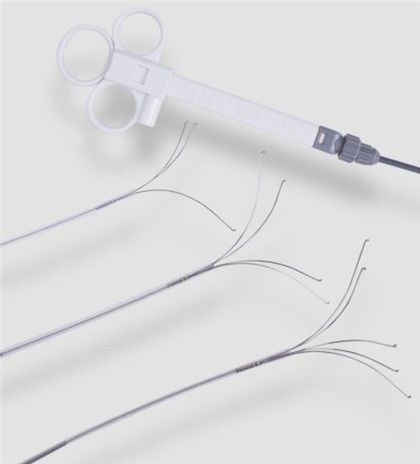
As a supplier for a 4 prong factory, I've often been asked whether these factories have research and development (R&D) departments. This question is not only relevant for those in the industry but also for potential buyers who are interested in the innovation and quality of the products. In this blog, I'll delve into the existence and importance of R&D departments in 4 prong factories.
The Existence of R&D Departments in 4 Prong Factories
In today's highly competitive market, many 4 prong factories do indeed have R&D departments. These departments play a crucial role in the continuous improvement and innovation of products. For instance, in the medical field, where 4 prong disposable grasping forceps are widely used, having an R&D team is essential to meet the ever - changing needs of the medical industry.
The development of Disposable Grasping Forceps with CE Certification is a prime example. The CE certification indicates that the product meets the safety, health, and environmental protection requirements of the European Union. To achieve this, factories need to invest in research to ensure that the design, materials, and manufacturing processes of the forceps are in line with these standards.
Moreover, with the increasing demand for more advanced and specialized medical instruments, 4 prong factories are constantly looking for ways to improve their products. An R&D department can conduct in - depth research on the ergonomics of the forceps, aiming to make them more comfortable and efficient for medical staff to use. They can also explore new materials that are more durable, less likely to cause allergic reactions, and have better sterilization properties.
The Importance of R&D in 4 Prong Factories
Product Innovation
One of the main reasons for having an R&D department is to drive product innovation. In the case of Disposable Grasping Forceps with 4 Pongs, an R&D team can come up with new designs that enhance the grasping ability of the forceps. For example, they can modify the shape and structure of the prongs to provide a more secure grip on tissues, which is especially important in delicate surgical procedures.
Quality Improvement
R&D departments are also responsible for improving the quality of products. Through continuous testing and analysis, they can identify potential problems in the manufacturing process and find solutions to address them. This can lead to a reduction in product defects and an increase in the overall reliability of the 4 prong forceps. For example, by using advanced manufacturing techniques and quality control methods, the R&D team can ensure that each pair of forceps meets the highest standards of quality.
Meeting Market Demands
The medical market is constantly evolving, and 4 prong factories need to keep up with these changes. An R&D department can conduct market research to understand the needs and preferences of customers. They can then develop products that are tailored to these demands. For instance, if there is a growing demand for Disposable Grasping Forceps with 3/4/5Prongs, the R&D team can work on developing new models that offer different prong configurations to meet the diverse needs of medical professionals.
Challenges Faced by R&D Departments in 4 Prong Factories
Despite the importance of R&D, these departments also face several challenges. One of the main challenges is the high cost of research and development. Developing new products and improving existing ones requires significant investment in equipment, personnel, and materials. This can be a burden for small and medium - sized 4 prong factories.
Another challenge is the time - consuming nature of R&D. It can take months or even years to develop a new product or improve an existing one. During this time, the market may change, and competitors may introduce new products, making it difficult for the factory to stay ahead.
Overcoming Challenges
To overcome these challenges, 4 prong factories can adopt several strategies. One strategy is to collaborate with research institutions or universities. By partnering with these organizations, factories can access a wider range of resources and expertise, which can help to reduce the cost and time of R&D.


Another strategy is to focus on incremental innovation. Instead of trying to develop completely new products, factories can make small improvements to existing products over time. This can be a more cost - effective and time - efficient way to keep up with the market.
Conclusion
In conclusion, many 4 prong factories do have R&D departments, and these departments play a vital role in the success of the factory. Through product innovation, quality improvement, and meeting market demands, R&D departments can help factories stay competitive in the market. Although they face challenges such as high costs and long development times, there are strategies that can be adopted to overcome these challenges.
If you are interested in purchasing high - quality 4 prong disposable grasping forceps, we invite you to contact us for further discussion. We are committed to providing you with the best products and services.
References
- "Medical Device Innovation: Trends and Challenges" - Journal of Medical Technology
- "Research and Development in the Medical Industry" - International Journal of Medical Research