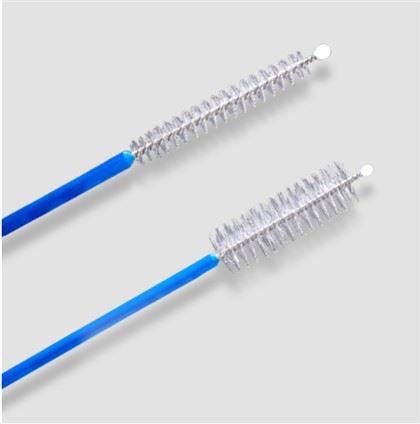
In recent years, the field of medical retrieval nets has witnessed remarkable advancements, largely driven by the integration of deep learning technologies. As a leading retrieval net supplier, I have witnessed firsthand how deep learning has revolutionized the design, functionality, and performance of retrieval nets, offering unprecedented opportunities for improving patient outcomes and enhancing the efficiency of medical procedures.
Understanding the Basics of Retrieval Nets
Retrieval nets are essential medical devices used in various minimally invasive procedures to capture and remove foreign objects, such as stones, blood clots, or tissue fragments, from the body. These nets are typically inserted into the body through a catheter or endoscope and deployed at the target site to entrap the object of interest. Once the object is captured, the net is retracted, along with the object, out of the body.
The effectiveness of a retrieval net depends on several factors, including its design, material properties, and the operator's skill. Traditional retrieval nets are designed based on empirical knowledge and clinical experience, with limited ability to adapt to different patient anatomies and object characteristics. This often results in suboptimal performance, increased procedure times, and a higher risk of complications.
The Role of Deep Learning in Retrieval Net Design
Deep learning, a subfield of artificial intelligence, has emerged as a powerful tool for solving complex problems in various domains, including healthcare. In the context of retrieval net design, deep learning algorithms can be used to analyze large amounts of data, such as medical images, patient demographics, and procedural outcomes, to identify patterns and relationships that are not easily detectable by human experts.
One of the key applications of deep learning in retrieval net design is the development of personalized nets tailored to the specific needs of individual patients. By analyzing patient-specific anatomical data, such as CT scans or MRI images, deep learning algorithms can generate customized net designs that optimize the capture and retrieval of foreign objects while minimizing the risk of tissue damage. This personalized approach has the potential to significantly improve the success rate of retrieval procedures and reduce the need for additional interventions.
Another important role of deep learning in retrieval net design is the optimization of net materials and manufacturing processes. Deep learning algorithms can be used to analyze the mechanical properties of different materials and predict their performance under various conditions. This information can be used to select the most suitable materials for a specific application and to optimize the manufacturing process to ensure consistent quality and performance.
Deep Learning for Retrieval Net Navigation and Guidance
In addition to its role in design, deep learning can also be used to enhance the navigation and guidance of retrieval nets during procedures. Real-time imaging techniques, such as fluoroscopy or ultrasound, are commonly used to visualize the position of the retrieval net and the target object. However, interpreting these images can be challenging, especially in complex anatomical environments.
Deep learning algorithms can be trained to analyze real-time imaging data and provide accurate and timely guidance to the operator. For example, a deep learning model can be trained to detect the position and orientation of the retrieval net and the target object in the image and to provide visual or auditory cues to the operator to help them navigate the net to the target site. This technology has the potential to improve the precision and efficiency of retrieval procedures and reduce the risk of complications.
Deep Learning for Predictive Analytics in Retrieval Net Procedures
Deep learning can also be used to develop predictive analytics models that can help clinicians anticipate the outcome of retrieval net procedures and make informed decisions about patient management. By analyzing historical data from a large number of procedures, deep learning algorithms can identify risk factors and predictors of success or failure. This information can be used to develop personalized treatment plans and to optimize the timing and approach of retrieval procedures.
For example, a deep learning model can be trained to predict the likelihood of successful retrieval of a foreign object based on factors such as the size, shape, and location of the object, the patient's anatomy, and the operator's experience. This information can be used to guide the selection of the most appropriate retrieval net and to determine the optimal strategy for the procedure.
The Future of Deep Learning in Retrieval Nets
The integration of deep learning technologies into retrieval nets is still in its early stages, but the potential benefits are significant. As deep learning algorithms continue to evolve and improve, we can expect to see even more advanced applications in the field of retrieval net design, navigation, and guidance.
One area of future research is the development of intelligent retrieval nets that can adapt to changing conditions during a procedure. For example, a retrieval net could be equipped with sensors that can detect the size, shape, and movement of the target object and adjust its shape and configuration accordingly. This would allow the net to optimize its performance and increase the likelihood of successful retrieval.
Another area of future research is the integration of deep learning with other emerging technologies, such as robotics and virtual reality. For example, a robotic retrieval system could be controlled by a deep learning algorithm to provide more precise and efficient navigation and manipulation. Virtual reality technology could also be used to provide operators with a more immersive and realistic training experience, allowing them to practice retrieval procedures in a safe and controlled environment.
Conclusion
In conclusion, deep learning has the potential to revolutionize the field of retrieval nets by improving their design, functionality, and performance. As a retrieval net supplier, we are committed to leveraging the latest deep learning technologies to develop innovative products that meet the evolving needs of our customers.
If you are interested in learning more about our retrieval nets or discussing potential applications of deep learning in your medical practice, please do not hesitate to contact us. We would be happy to provide you with more information and to schedule a demonstration of our products.
References
- LeCun, Y., Bengio, Y., & Hinton, G. (2015). Deep learning. Nature, 521(7553), 436-444.
- Litjens, G., Kooi, T., Bejnordi, B. E., Setio, A. A. A., Ciompi, F., Ghafoorian, M., ... & van Ginneken, B. (2017). A survey on deep learning in medical image analysis. Medical image analysis, 42, 60-88.
- Rajpurkar, P., Irvin, J., Zhu, K., Yang, B., Mehta, H., Duan, T., ... & Lungren, M. P. (2017). CheXNet: Radiologist-level pneumonia detection on chest X-Rays with deep learning. arXiv preprint arXiv:1711.05225.
For more information on our foreign body forceps with net, please visit foreign body forceps with net. If you are interested in purchasing our retrieval nets or discussing potential partnerships, feel free to reach out to us for further details and procurement negotiations.