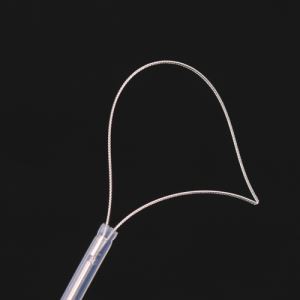
Hey there! As a retrieval net supplier, I've seen firsthand how crucial it is to pick the right open - source library for your retrieval net projects. In this blog, I'll share some tips on how to make that choice.
Understanding Your Needs
First things first, you gotta understand what you need from the open - source library. Think about the features you require. Are you looking for a library that can handle large - scale data retrieval? Maybe you need one that has advanced filtering options. Or perhaps you're more interested in a library that offers real - time retrieval capabilities.
For example, if you're dealing with a retrieval net that's used in a medical setting, like a foreign body forceps with net, you might need a library that can quickly and accurately identify different types of foreign objects. You'll want a library that has good image recognition algorithms if the retrieval net is part of an imaging - based system.
Researching Available Libraries
Once you've got a clear idea of your needs, it's time to start researching the available open - source libraries. There are tons of them out there, and each has its own strengths and weaknesses.
One way to start is by looking at popular developer communities like GitHub. You can search for libraries related to retrieval nets and see which ones have the most stars, forks, and active contributors. A high number of stars usually means that the library is well - liked and maintained by the community.
For instance, if you search for "retrieval net open - source libraries" on GitHub, you'll find a bunch of options. Take a look at the README files of these projects. They usually contain information about the library's features, how to install it, and how to use it.
Evaluating the Library's Performance
Performance is a key factor when choosing an open - source library. You want a library that can handle your retrieval tasks efficiently.
One aspect to consider is the speed of retrieval. If you're dealing with a large dataset, a slow - performing library can cause significant delays. You can look for benchmarks and performance tests that other developers have conducted on the library. Some libraries even provide their own performance metrics on their official websites.
Another important factor is memory usage. A library that consumes too much memory can lead to performance issues, especially if you're running it on a device with limited resources. Make sure to check if the library has any memory - optimization features.
Assessing the Community Support
The support of the open - source community can make a huge difference. A library with an active community is more likely to be updated regularly, have fewer bugs, and offer better documentation.
Check if the library has a dedicated forum or a GitHub issues page. This is where you can ask questions, report bugs, and get help from other developers. A library with a large and engaged community will usually have quick responses to your queries.
For example, if you encounter a problem while using a library, you can post your issue on the GitHub issues page. If there are other developers who are also using the library, they might be able to offer solutions or point you in the right direction.

Compatibility with Your Existing Systems
You need to make sure that the open - source library is compatible with your existing systems. This includes the programming languages you're using, the operating system, and any other software or hardware components.
If you're using a specific programming language like Python, make sure the library is available in that language. Some libraries might only support certain versions of a programming language, so double - check that.
Also, consider the operating system. If you're running your retrieval net system on a Linux server, you'll want a library that is compatible with Linux.
License Considerations
The license of the open - source library is another important factor. Different licenses have different terms and conditions.
Some licenses, like the MIT license, are very permissive. They allow you to use, modify, and distribute the library freely. Other licenses, like the GNU General Public License (GPL), have more restrictions. For example, if you use a GPL - licensed library in your project, you might be required to release your entire project under the GPL license.
Make sure you understand the license terms before you start using the library. This will help you avoid any legal issues down the road.
Testing the Library
Before you fully commit to a library, it's a good idea to test it out. You can create a small test project and see how the library performs in a real - world scenario.
Try out different features of the library and see if they meet your requirements. For example, if you're looking for a library that can perform text retrieval, test it with different types of text data. See how accurate the retrieval results are and how fast the library can process the data.
Conclusion
Choosing the right open - source library for your retrieval net is not an easy task, but it's definitely worth the effort. By understanding your needs, researching available libraries, evaluating performance, assessing community support, checking compatibility, considering the license, and testing the library, you can make an informed decision.
If you're interested in purchasing retrieval nets or need more information about choosing the right open - source library for your specific needs, feel free to reach out for a procurement discussion. I'm here to help you make the best choice for your project.
References
- GitHub Documentation: https://docs.github.com/
- Open Source Initiative: https://opensource.org/