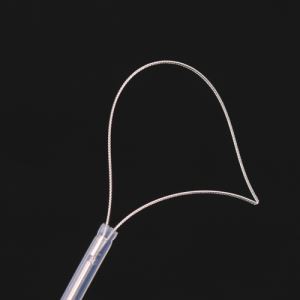
Hey there! I'm a supplier for a 5 prong factory, and today I wanna chat about the raw materials needed for such a factory.
First off, let's talk about the metal. Most 5 prong products, like the Disposable Grasping Forceps with 5 Ring, are made from high - quality stainless steel. Stainless steel is a go - to material because it's corrosion - resistant. You don't want your 5 prong tools rusting away, right? It can withstand the wear and tear of regular use and is also easy to clean and sterilize, which is super important, especially in medical or industrial settings.
Another key raw material is plastic. For the handles of 5 prong products, plastic is often used. It provides a comfortable grip for the user. Take the disposable grasping forceps with 3 - ring handle as an example. The plastic handle is designed to fit nicely in the hand, reducing fatigue during long - term use. Different types of plastics can be used, such as polypropylene or polyethylene. These plastics are lightweight, durable, and can be molded into various shapes.
Rubber is also an important part of the equation. Some 5 prong tools might have rubber tips. Rubber provides a better grip on objects, preventing slippage. It can be used on the prongs themselves or on the parts that come into contact with the user's hand. For instance, in some medical 4 - Prong Disposable Grasping Forceps, rubber tips are added to ensure a secure hold on tissues or other small objects.
When it comes to the production of 5 prong items, we also need lubricants. Lubricants are used during the manufacturing process to make sure the moving parts of the tools work smoothly. They can reduce friction between different components, which not only improves the performance of the product but also extends its lifespan.


Now, let's talk about the quality control of these raw materials. As a supplier, I make sure that all the raw materials I provide meet the highest standards. I work with reliable manufacturers who have a good track record in producing high - quality materials. For the stainless steel, I check for its chemical composition to ensure it has the right amount of chromium and nickel, which are key elements for corrosion resistance.
For the plastics, I test their strength and flexibility. I want to make sure that the handles won't break easily or become too brittle over time. And for the rubber, I check its hardness and elasticity. A good rubber should be able to maintain its shape and grip even after multiple uses.
In addition to the main raw materials, there are also some other small components that are needed. For example, there might be small screws or rivets used to hold different parts of the 5 prong tool together. These might seem like minor details, but they are crucial for the overall functionality of the product.
When sourcing these raw materials, I have to consider a few things. First of all, cost is always a factor. I need to find a balance between getting high - quality materials and keeping the cost down for the factory. I also need to ensure a stable supply. I don't want the factory to run out of raw materials in the middle of production. So, I build good relationships with my suppliers and have backup plans in case there are any disruptions in the supply chain.
Another aspect is the environmental impact. I'm committed to providing eco - friendly raw materials as much as possible. For example, I look for plastics that are recyclable or made from sustainable sources. This not only helps the environment but also meets the growing demand from customers who are more conscious about environmental issues.
If you're running a 5 prong factory and are looking for a reliable supplier of raw materials, I'd love to have a chat with you. I can offer you high - quality materials at competitive prices. Whether you need stainless steel, plastic, rubber, or any other components, I've got you covered. Let's start a conversation about your specific needs and see how we can work together to make your production process more efficient and cost - effective.
References:
- General knowledge of manufacturing and materials science